24/7 Emergency Tree Removal
How to Tell if a Tree Is Dying: Warning Signs Every Property Owner Should Recognise
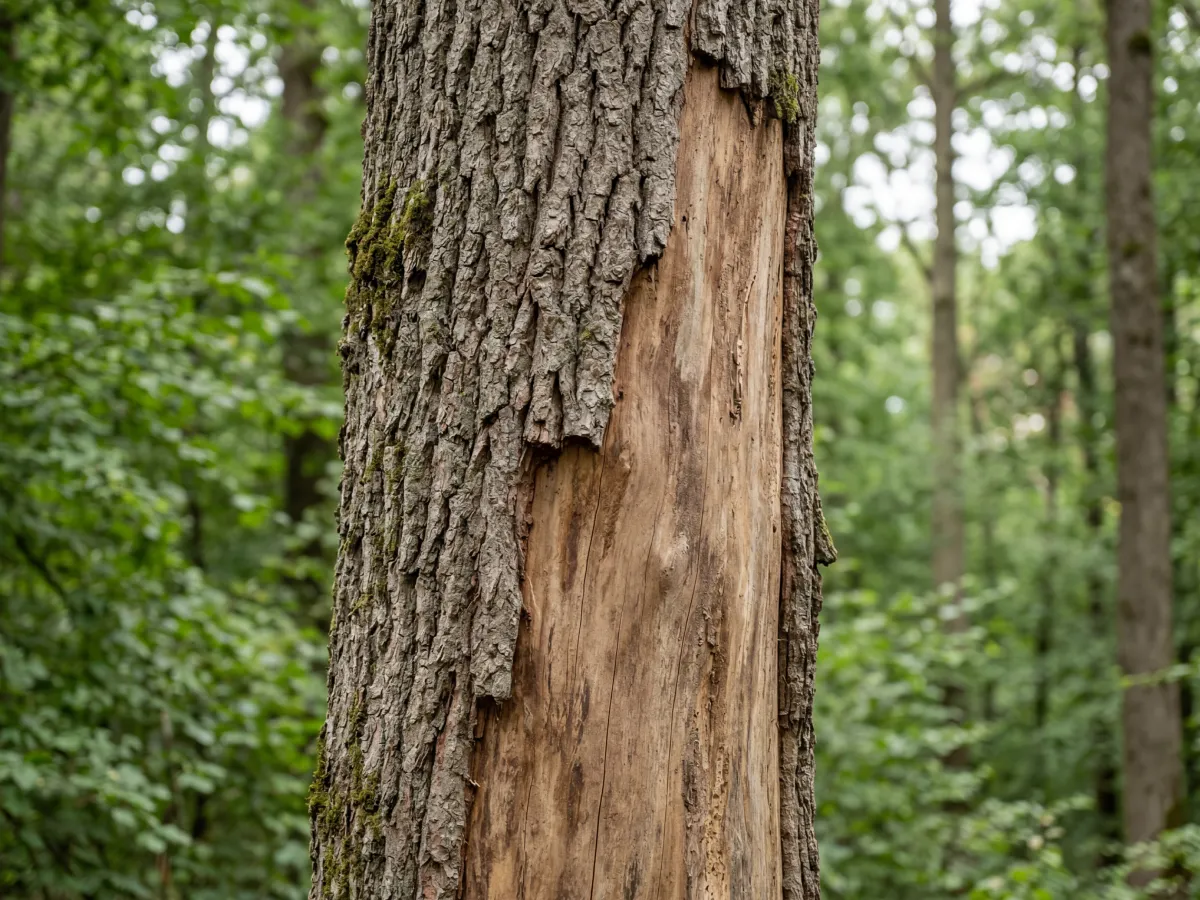
Trees bring shade, privacy, and long-term value to residential and commercial properties across Metro Atlanta. However, when a mature tree begins to decline, it quickly turns from a natural asset into a serious liability. Heavy storm winds, soil compaction, diseases, and fungal infections can quietly weaken a tree from the roots up. By the time a trunk splits or a heavy limb falls across a driveway, the damage has often been developing for months or years.
Learning how to tell if a tree is dying allows you to catch hidden structural defects, fungal decay, and root failure before a sudden collapse damages your home, fence, or vehicles. We created this detailed guide to help you identify the critical warning signs, evaluate potential hazards, and understand when it is time to bring in professional support to protect your land and family.
Why Recognizing Tree Decline Matters for Property Owners
A declining tree is far more than an aesthetic issue; it is a structural safety hazard. Large, heavy trees hold immense weight in their upper canopies. When wood decay sets in, the internal strength of the trunk and branches degrades, making the tree vulnerable to sudden failure, even on calm, windless days.
Beyond physical safety, ignoring the early signs of a tree dying often leads to much higher expenses down the road. Catching health issues early may allow you to save the tree through targeted structural care, soil improvements, or pruning. If the tree is beyond saving, scheduling a controlled removal is significantly safer and less expensive than dealing with emergency storm cleanup, roof repairs, or insurance claims after a catastrophic fall.
+———————————————————————–+
| HEALTHY TREE vs. DYING TREE |
+———————————————————————–+
| FEATURE | HEALTHY SIGN | DYING WARNING SIGN |
+——————+—————————+————————|
| Bark | Intact, firm attachment | Peeling, deep cracks |
| Canopy / Leaves | Full, vibrant, seasonal | Early drop, bare tips |
| Trunk / Wood | Solid, flexible branches | Brittle, shelf fungi |
| Soil / Base | Ground intact, stable | Heaving soil, decay |
+——————+—————————+————————+
Key Above-Ground Signs of a Dying Tree
Evaluating tree health begins by looking up and down the primary structure. You can spot many indicators of severe decline right from the ground if you know what to look for along the trunk, limbs, and canopy.
Canopy Dieback and Thinning Leaves
One of the clearest visual indicators of distress starts at the very top of the tree. Crown dieback occurs when the uppermost branches stop receiving water and nutrients from the root system.
- Bare Branch Tips: Upper limbs remain completely bare during spring and summer while lower branches leaf out.
- Thinning Foliage: The canopy looks unusually sparse, allowing bright sunlight to pass straight through areas that were previously dense and shaded.
- Unseasonal Leaf Color: Leaves turn brown, yellow, or drop off months before autumn arrives.
- Dwarf Foliage: New leaves grow noticeably smaller, paler, or distorted compared to healthy seasons.
When a tree loses significant canopy density, its ability to photosynthesize drops dramatically. This triggers a downward cycle where the tree starves itself of the energy required to fight off insects and fungal infections.
Bark Cracks, Flaking, and Cankers
Bark acts as a tree’s protective skin, shielding internal vascular tissues from pests, weather, and disease. Changes in bark texture and adhesion are strong indicators of internal wood decay or severe water stress.
[ Bark Damage Types ]
├── Vertical Cracks ──> Indicates internal trunk splitting or structural instability
├── Peeling / Shedding ─> Signals dead cambium layer beneath the surface
└── Cankers (Sunken Areas) ──> Points to localized fungal or bacterial infections
If you notice large pieces of bark falling off the trunk without new bark forming underneath, the underlying cambium layer is dead. Smooth, bare patches of wood along the main trunk mean water and nutrients can no longer flow through that section of the tree.
Fungal Growth and Shelf Mushrooms
Fungi do not attack healthy, dense heartwood without an entry point; they thrive on decaying organic matter. If you see mushrooms or bracket fungi (often called shelf conks) growing directly on the trunk, main branch unions, or around the base of the tree, wood decay is actively taking place inside.
- Conks on the Trunk: These hard, shelf-like mushrooms indicate advanced sapwood or heartwood rot.
- Base Fungi: Clusters of mushrooms sprouting around the root collar signal severe root system decay.
- Soft, Spongy Wood: Areas around the fungal growth feel soft, wet, or crumble under light pressure.
By the time fruiting bodies appear on the outside of a trunk, internal decay has usually been progressing for a long time, compromising the structural strength of the wood.
Trunk Cavities, Hollows, and Structural Cracks
Not all hollow trees are immediately dangerous, but large cavities combined with decay significantly increase the risk of trunk failure. Deep vertical seams running down the trunk, target-shaped wounds, or hollow cavities near major branch attachments indicate structural weakness.
If a cavity occupies more than one-third of the trunk’s diameter, or if deep cracks extend entirely through the bark into the inner wood, the tree’s load-bearing capacity is compromised. In these cases, a formal tree risk assessment is necessary to evaluate whether the remaining sound wood can safely support the canopy’s weight.
Below the Surface: Identifying Root System Failure
While trunk and branch issues are easy to spot, the root system provides the structural anchor and life-support network for the entire tree. Root failure is particularly dangerous because a tree with a full, green canopy can still fall over completely if its root system rots or breaks away from the soil.
Visual Signs of Root System Failure
/||\ [Green Canopy – Can mask root decay!]
//||\\
///||\\\
|||
|||
===========|||=========== <- Ground Level
\ / | \ /
\ / | \ / <- Heaving/Cracked Soil
\ / | \ / <- Decayed, Severely Damaged Roots
Soil Heaving and Root Lifting
Walk around the base of your mature trees after heavy rainfall or high winds. If you notice the soil lifting, cracking, or mounding up on one side of the tree, the root plate is actively pulling out of the ground. This is a critical structural failure requiring immediate safety precautions.
Decay at the Root Collar
The root collar, where the trunk flares out as it enters the dirt, should always remain visible above the soil line. If soil, pine straw, or heavy mulch is piled high against the trunk (often called “mulch volcanoes”), moisture gets trapped against the bark. Over time, this rots the bark and smothers the root collar. Gently scrape away excess soil or mulch; if the bark underneath is soft, dark, and peels away easily, root collar decay has set in.
Recent Construction and Soil Compaction
Roots extend far beyond the drip line of the tree canopy, usually staying within the top 12 to 24 inches of soil. Recent home additions, driveway paving, utility trenching, or heavy equipment driving over the root zone sever critical roots and compact the soil. Compacted soil starves roots of oxygen and water, causing slow decline and root failure over a 2 to 5 year period.
Scratch Test and Branch Flexibility: A Quick DIY Inspection
If you are unsure whether a specific limb or small tree is dead or simply dormant, you can perform two quick field tests:
- The Snap Test: Gently bend a small twig or outer branch. Healthy branches are flexible and bend smoothly under pressure. Dead branches are brittle, dry, and snap quickly with a sharp cracking sound.
- The Scratch Test: Use a pocketknife or your fingernail to carefully scrape away the outer layer of bark on a small twig. If you see a bright, moist green layer (the cambium layer) underneath, the branch is alive. If the wood beneath the bark is brown, dry, and dull, that section of the branch is dead.
Perform this test across several different areas of the canopy. If dead wood is isolated to one or two outer branches, professional tree trimming services may solve the problem by removing deadwood and improving airflow. However, if the scratch test shows brown wood across multiple main limbs, the entire tree is likely in active decline.
Common Causes of Tree Death in Georgia
Understanding what drives tree decline helps you prevent damage to healthy trees on your land. Property owners across Cartersville and the surrounding Metro Atlanta area frequently deal with several key factors:
+———————————————————————————–+
| PRIMARY CAUSES OF TREE DECLINE |
+———————————————————————————–+
| CAUSE | DESCRIPTION & IMPACT |
+————————+———————————————————-+
| Extreme Weather | Severe storms, ice, high winds, and extended summer |
| | droughts strain root systems and break structural limbs. |
+————————+———————————————————-+
| Soil Compaction | Heavy construction equipment or vehicle parking packs |
| | soil, cutting off root oxygen and water intake. |
+————————+———————————————————-+
| Pest Infestations | Pine beetles, emerald ash borers, and wood-boring insects|
| | tunnel through cambium layers, severing nutrient paths. |
+————————+———————————————————-+
| Fungal Infections | Root rot, hypoxylon canker, and heart rot decay wood |
| | internally, stripping the tree of structural integrity. |
+————————+———————————————————-+
| Improper Pruning | Topping trees or making improper flush cuts leaves open |
| | wounds that invite rot, pests, and decay fungi. |
+————————+———————————————————-+
When Is a Dying Tree Considered a Hazard?
A dying tree is not automatically an immediate emergency, but it becomes a severe threat when it has a clear “target.” In industry terms, a target is anything of value that could be damaged or hurt if the tree or its branches fail, such as your house, garage, power lines, shed, driveway, play set, or neighboring properties.
Ask yourself the following safety questions:
- Is the tree leaning noticeably toward a building, parking area, or busy walkway?
- Are there large, dead limbs overhanging your roof, deck, or power lines?
- Does the main trunk feature deep cracks, hollows, or large clusters of shelf fungi?
- Has the surrounding soil lifted or shifted following recent heavy storms?
If you answered yes to any of these questions, asking how do you know if a tree is dying is no longer just a curiosity; it is a pressing property safety concern. Hazardous trees need prompt professional evaluation before sudden weather events force the issue.
What Happens During an Inspection and Risk Assessment?
When you suspect a tree on your property is declining, scheduling professional tree inspection services gives you clear, actionable answers. Rather than guessing whether a tree can be saved, having an arborist evaluate the site removes the uncertainty.
Arborist Risk Assessment Workflow
[ 1. Visual Crown & Foliage Assessment ]
│
▼
[ 2. Trunk & Structural Shell Inspection ]
│
▼
[ 3. Root Flare & Soil Line Evaluation ]
│
▼
[ 4. Target & Risk Severity Scoring ]
│
▼
[ 5. Clear Action Plan: Pruning, Support, or Removal ]
A complete evaluation involves several step-by-step checks:
- Canopy and Foliage Health Assessment: Checking leaf size, crown density, dieback percentage, and annual growth rates.
- Trunk and Shell Integrity Check: Inspecting bark adhesion, cavities, cracks, and testing for internal decay or hollow wood within the trunk shell.
- Root Flare and Ground Inspection: Examining the soil line for fungal conks, girdling roots, soil heaving, or structural root loss.
- Target and Hazard Analysis: Assessing the surrounding area to measure potential impact severity if a limb or the main stem fails.
Following a thorough evaluation, you receive an honest breakdown of your options. If the tree is structurally sound and caught early enough, choices like crown cleaning, deadwood removal, or tree cabling and bracing can lower safety risks while preserving the tree. If the tree poses an unacceptable safety hazard or decay is too advanced, controlled tree removal services will be recommended to protect your property.
How Georgia Tree Masters Protects Your Land and Home
Recognizing the warning signs of a dying tree is the first step toward maintaining a safe, beautiful property. Whether you are dealing with sparse foliage, fungal growth on a trunk, or storm damage, taking action early protects your home, family, and land investment.
We created Georgia Tree Masters in 2020 out of a genuine passion for trees, outdoor land management, and helping local property owners make informed decisions. As a veteran-owned company with over 30 years of combined industry experience, our arborist team provides honest guidance. We recommend tree removal only when it is truly necessary for safety, offering professional pruning, structural support, land clearing services, and forestry mulching services to keep your landscape healthy and accessible. Fully licensed, insured, and bonded, we handle everything from routine health inspections to emergency tree removal around the clock.
If you suspect a tree on your property is declining, do not wait for the next storm to test its strength. Call us today at (678) 630-1825 to schedule your inspection and ask about our 10% discount for veterans, first responders, and seniors.